Toob Outages

In September 2023, I noted that the Toob internet service was down. I first noted this at 08:40 in the morning.

I have used toob since May 2022 and this was the first daytime or evening outage I had noticed. There have been a couple of middle-of-the-night outages for a few minutes – probably routine maintenance.

I phoned Toob at 09:30 to see if there was an outage in the area. I was not at home at the time and was unable to check in detail. Toob said that other subscribers in the area were OK and that Toob was not aware of any issues. They noted they could not see light coming from the ONT on my premises.

I was puzzled as to what might have caused this. Could it be a power failure in my house? Will the food in my fridge and freezer be damaged? If I return home after dark, as was planned, will I be met with a dark house with no power and no dinner? I decided to return home to investigate in daylight hours.

On returning home I noted the power was still on. Upon investigation, I found the ONT had a red light on (Green – Red – Green). Red light means trouble. I called the Toob customer services number again at about 13:30. I re-powered the ONT and router, at his request, and he noted the problem had not changed. He dispatched an engineer to visit the same day.

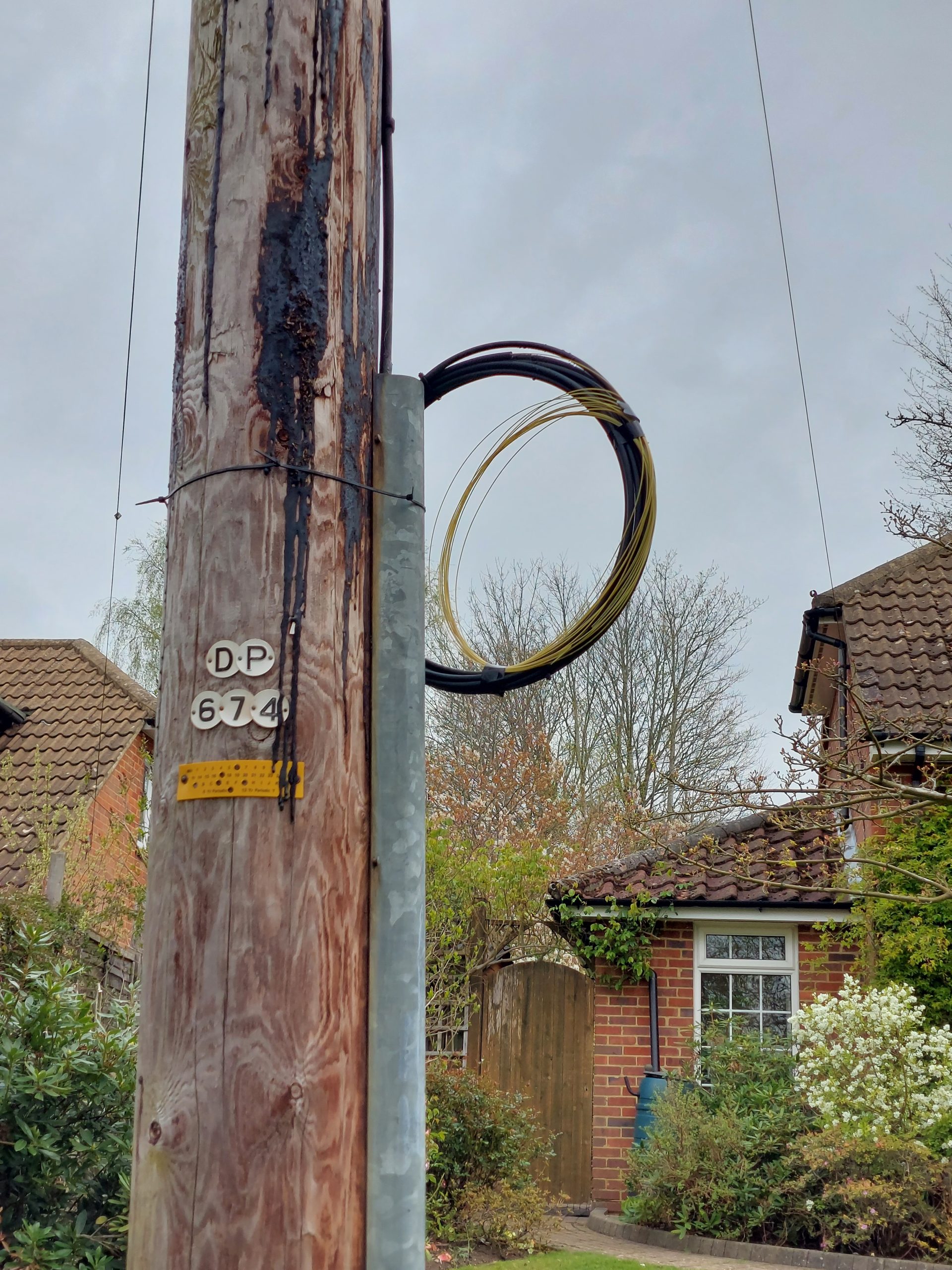
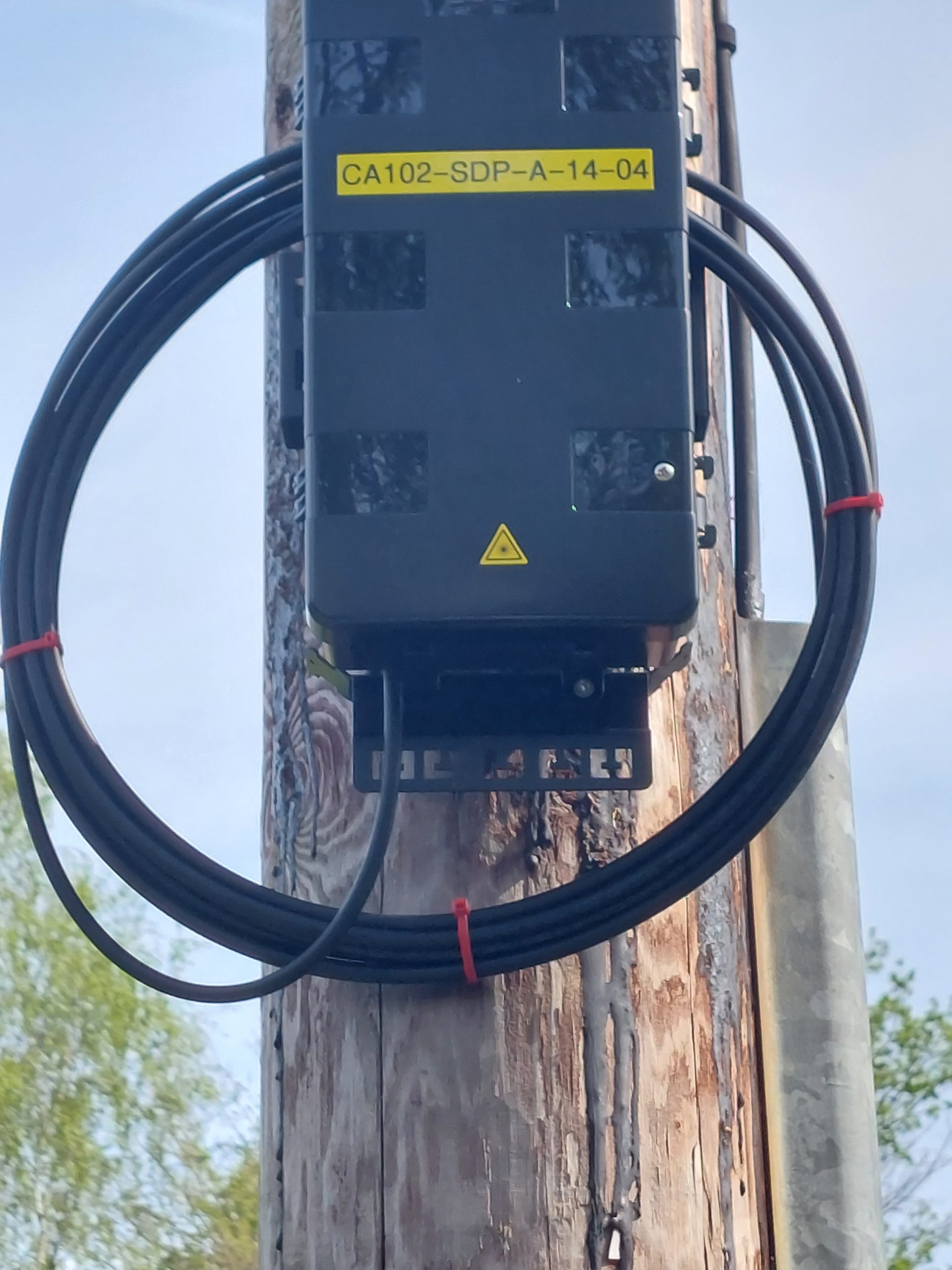
At 15:00 the Toob engineers re-terminated a fibre cable in the termination box outside the house and my internet service was working again by 15:20.

What good service!


October 24, 2023 – I noticed a brief outage at 03:00 – 03:02 – phoned Toob.
Is this the start of the outage as a few weeks ago?
Same symptoms – brief overnight outages.


  • February 2024 – I noticed 2 outages about a week apart. These were both due to equipment failure in a data centre. The system was out for several hours right across the toob network and affected most customers. As a result, toob has introduced Status Page on their network.

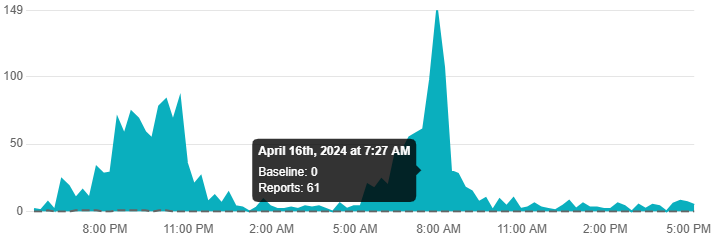
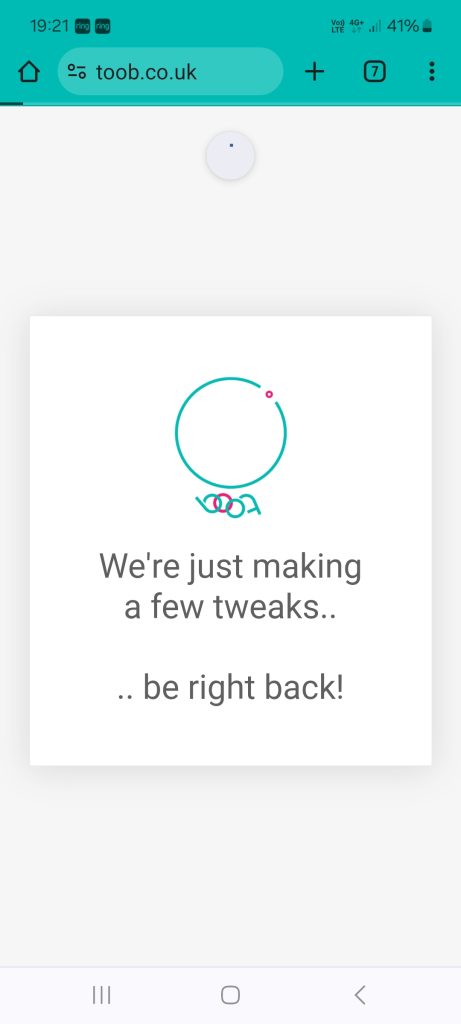
  • April 15 2024 – I noticed a severe throttling of the throughput to some websites on the evening of April 15, 2024. Notably, the websites hosted by Zen, but also others, including toob’s own website. The next morning throughput was so slow that it would not load.

Thruput was down to MINIMAL
0.09 Mbps

However, Google seemed unaffected, perhaps a routing issue. Other ISPs indicated they had no issues. None on DownDetector. The problem persisted until 08:15 the next day (April 16) when all returned to normal.

DownDetector reported many users were having issues. It’s a pity toob’s customer service was closed; as soon as it opened, they became aware of the issue and all was resolved.

Toob’s status page was not updated until some time later, and any sign of the outage was removed from the status page by late afternoon.


August 9, 2024 – Toob service went down just before 18:00 – the router light was red – the ONT had 3 green lights.

Downdetector reported issues.

Toob’s website and network status page were either not available or reporting issues.

Service was restored by 20:30
Reported in ISPReview


October 25, 2024 – Experienced a brief (10-minute) outage. By the time I had noticed and investigated the service had returned to normal.
Toob emailed customers to advise them of the outage. How widespread? Exact duration? Cause? Not mentioned in the email


October 28, 2024 – Experience a brief routing issue, some sites were accessible and some were not. I connected via a VPN and everything seemed OK. Unable to diagnose further.


December 18, 2024 – Experienced a brief outage at 11:28-11:32. Asked toob cust service and no reason was found.

Telecare and the PSTN shutdown

I looked at several leading telecare providers – Dec 23

LifeConnect24

  • Lifeline Personal Alarm – landline
  • Lifeline Fall Detector – landline
  • Lifeline SmartLife Personal Alarm – digital

CareLine

  • Careline Pendant Alarm – landline
  • Careline Fall Alarm – landline
  • Careline SmartLife Personal Alarm – digital

Age UK

  • Classic Personal Alarm – landline
  • Digital Fall Alarm – digital
  • Taking Care Anywhere – digital

Taking Care

  • Several types of Alarm

Summary

  • Each are offering different services, at different prices, but all offer very much the same range of devices for communication.
  • Each provider was still selling landline connected devices.  
  • Each provider offered a device that was capable of digital communications.  This device was marketed for connection via the mobile data network, but I understand that the device in question is capable of connection via the internet.  
  • Most did not address the landline shutdown issue on their websites or specified that any devices were capable of digital communications via the internet.
    The exception was Taking Care which says its alarms have been tested. It has a section of its website devote to the Digital Switchover
  • None addressed the 3G mobile network shutdown issue

There are 1.7 million users of telecare alarms in the UK.

Suppliers
A major UK supplier of telecare products is Tunstall. This company is now (in March 2023) selling a digital (internet-connected) device for its alarm system.


TSA – Trade body for Telecare Providers

There is a good paper on theis trade body’s website discussing the issues of the PSTN shutdown
Digital Shift


Silver Voices has concerns over BT’s plans

Guardian article (Dec 23) – issues with older telecare kit

Telegraph article (Dec 23) – Telecare providers not doing enough

OpenReach may continue to provide analogue services

The Daily Telegraph

ISPreview


The Great British Switch-Off

Taken from zen.co.uk

If you haven’t heard about the Great British Switch-Off yet, you need to know that 2023 will be the year it really swings into full gear. Here’s how home broadband and telephone services will change forever.

The big switch off

In 2025, the copper telephone network, provided by BT’s Openreach division, will be switched off completely. You might know it as the public switched telephone network (PSTN) network or just that socket on the wall that your phone and router plug into.

The old copper network has been around for more than a hundred years, and it’s beginning to show its age. It is becoming increasingly difficult and costly to maintain, repair and keep up-to-date and – frankly – it is no longer able to adequately cope with our ever-increasing demand for faster broadband connections. We’ve managed to squeeze just about the maximum level of performance out of it. If you’re using a copper or Fibre to the Cabinet (FTTC) broadband service, think about how much faster it is today than 20 years ago, but it has just about reached its practical limits. Squeezing extra performance is more expensive and restrictive than the full fibre alternative.

Who is affected

The PSTN provided by Openreach is going away, to be replaced by something better. There are various internet service providers (ISPs) that use the Openreach network. These include BT, Sky, TalkTalk, Plusnet, EE, Vodafone and others. Users of these ISPs are likely to be affected by the switch-off .

Over recent years a number of alternative network providers (Alt-Nets) have been installing high-speed full-fibre internet service in many areas. Users of these altnets are not affected by the PSTN switch-off. If you get your internet and home phone service from VirginMedia, then this change may also affect you. Users of Openreach FTTP full-fibre services will have already made the necessary changes.

Why 2023

But if the switch-off is happening in 2025, why is 2023 such a big deal? That’s all about proper planning and preparation. Imagine if one day in late 2025, your telephone and broadband connection didn’t work anymore. There would be havoc as millions of people across the country were no longer able to communicate, work – or do whatever else they do with their phone connections.

That’s why, two years out from the big event Openreach is to stop selling PSTN. Such a “stop-sell” will make the transition much smoother. It’s already started in fact, but 2023 is the year where the stop-sell will gather real momentum. More and more local exchanges throughout the UK will have their copper services withdrawn from sale. If you’re connected to one of those exchanges, that means you’ll no longer be able to purchase a copper or fibre to the cabinet (FTTC) broadband connection, or a phone line. It’s not just new purchases that will be affected; upgrades, regrades and even repairs will also become increasingly scarce.

Better broadband

As those connections go away, if you haven’t upgraded already, you’ll need a different way to connect to the internet. But as one door closes, another invariably opens. And in the case of copper and FTTC broadband that means more modern alternatives – known as full-fibre or Fibre to the Premises, or (FTTP) and SOGEA (which stands for Single Order Generic Ethernet Access – quite the mouthful).

As the full-fibre rollout continues across the UK, more and more homes will have access to this newer broadband technology that promises greater speeds than the older alternatives – and better reliability to boot. That’s because it doesn’t use the old copper network at all, but rather, fibre optic cables to carry all your data.

In those places where full fibre isn’t available, users won’t be left with no internet service. Instead, they’ll be able to connect to the internet using a SOGEA service which, without going into too much detail, is similar to an FTTC service but without the phone line. It will provide similar levels of performance, so if you’re not able to get a full-fibre connection, SOGEA can keep you connected. And though the telephone network is being switched off, the copper network infrastructure that exists today will keep those SOGEA connections moving.

No phone

When the PSTN network is switched off, if you don’t already have an alternative set up, you won’t be able to make and receive calls at home. Thankfully, we’re already prepared for the transition. Over the course of this year – if you haven’t already – you should be contacted by your ISP regarding your future telephone needs.

Many of the nearly 30 million Openreach home phone users will simply stop using their home phone and use mobile phone services instead. However, many people, particularly those in rural areas, cannot rely on their mobile phone to work when they need it and depend on their home phone. Small businesses also rely on their office phone.

As the copper telephone network is withdrawn from use, you’ll be offered an alternative Digital Voice service. That Digital Voice service will allow you to make and receive calls at home – using your broadband connection instead of traditional telephone lines. It’s a completely different type of technology (VoIP) but as far as the user is concerned, the only difference will come in where the telephone is plugged (into the router instead of the master socket).

A little more

That’s all there is to it, for the most part. And while these changes are profound – how we connect and communicate is going to change completely – by getting ready now, the transition should be perfectly smooth for most of us.

But what if you’re using other services that rely on the copper telephone network – like home alarm systems, emergency pendants or even lift communication services? In that case, we would recommend contacting your supplier to check that they’re prepared for the switch-off. They should have plans in place for what will happen, and they should be able to communicate those plans with you.


But from April 2023 they’ll start expanding those pilots to include lower usage landline customers (those who have a full-fibre broadband connection already) in more locations:-

  • East Midlands & Humberside
  • Yorkshire
  • Northern Ireland

Rollout 2023-2024

However, BT said they aren’t currently switching certain groups, including: 

  • people aged 70 and over
  • people with additional needs
  • people who only have a landline (and not broadband)
  • people with telecare alarms
  • people with no mobile signal at home.

A PODCAST about the Big Switch Off

AgeUK

The Daily Telegraph


Email Challenges when Changing ISP

with thanks to the ZZOOMM website

Internet Service Provider Email Accounts

Many broadband services come with a free email address when you sign up. This service addition can create a dilemma when it comes to switching ISPs (Internet Service Providers). Our email accounts are used not just for communication, but commonly to store important information with the companies we have a relationship with.

That means changing an ISP-provided email address can sometimes be considered a barrier to switching to a faster, better AltNet ISP (such as Zzoomm).

The good news is that it needn’t be! You don’t have to lose your email account or your data. Most broadband companies will allow you to switch and keep your email address, although some may charge you a fee for doing so and some may restrict access to it via a web client.

This section takes a look at the various ISP variations and what you need to know about the email addresses provided if you’re planning to switch ISP’s.

At the core of the matter is the question, can you keep your provider-linked email address? The short answer is yes, sometimes — but the real question is, should you?

Keeping your email address when you switch broadband providers

Not all providers will allow you to keep your email address once you switch. For example, the Post Office and Virgin Media will delete your email account once you’ve left.

However, a number of other providers allow you to retain access to your email address for a monthly fee. These fees aren’t fixed by external governing bodies so can be very expensive.


Specific Supplier Examples

Can I keep my email address if I leave BT for Zzoomm?

You can still access your BT email address for 60 days after you switch to a different broadband provider. After that, you’ll have to subscribe to BTs Premium Mail service to retain access. As the name suggests, you’ll need to pay a monthly fee, currently £5 each month for the account. Switching is relatively simple and BT will automatically move your accounts across for you.

I’m switching from Plusnet to Zzoomm, will I lose my Plusnet email account?

If you switch from Plusnet to another provider, you can take your email account with you. Like BT and others, the company will charge a monthly fee and will migrate the account and all emails for you.

Can I ditch Sky to get Zzoomming and keep my email address?

Sky has switched to Sky Yahoo! Mail, which the company claims means you have an “email for life”. It is essentially the free Yahoo! Mail but with Sky branding. That means if you switch from Sky, you’ll be able to keep your email address, and with it all the messages and data you’ve stored in your account. Sky does reserve the right to delete an account if you haven’t used it for 180 days. If Sky closes a “dormant” account, you’ll lose any associated data and content.

I want to switch to Zzoomm from TalkTalk, can I keep my TalkTalk email account?

All TalkTalk broadband customers have TalkTalk Mail included in their package. Should you leave TalkTalk, you can subscribe to TalkTalk Mail Plus and keep your email address, currently for £5 per month or £50 per year. Otherwise, you’ll see your functionality reduce 30 days after you leave, and after 5 months TalkTalk will delete it.

Can I switch from Virgin Broadband to Zzoomm and keep my email account?

Once you give notice to Virgin Media, you’ll have 90 days before your email address is cancelled. After that, Virgin Media will clear out your emails, delete all data associated with your account and shut it down.

You may be with an ISP that we haven’t listed here so the best thing for you to do is contact them directly and ask if you can keep your email address when you switch to Zzoomm.


What’s an alternative: Why not get a free email account that is not tied to a provider?

You don’t need to be tied to any broadband provider with your email account. You can make the switch to a free webmail account. While it might be a hassle in the short term, it will give you the freedom to switch pain-free for years to come.

There are several options available including:-

  • Apple iCloud,
  • Google’s Gmail,
  • Microsoft Outlook (formerly Hotmail) and
  • Yahoo! Mail.

The choice you make may depend on the types of devices you have (if you’re using an iPhone versus an Android-Google phone, for example, or if you use a PC or laptop for email).

You may wish to take this opportunity to consider having several new email accounts –

  • one for social media,
  • one for business,
  • one for family,
  • one for banking and
  • one for online shopping accounts.

It’s also worth bearing in mind that the storage capacity for each may vary, although some will allow you to pay a monthly subscription to increase storage.


Moving your email to Gmail

Visit gmail.com and follow the on-screen instructions. Once you have set up your Gmail account click on the settings menu, (the cog icon in the top right corner).

Click ‘Accounts and Import’ and then ‘Import mail and contacts’.

You’ll need to enter your email address here and follow the on-screen instructions.

Don’t Lose An Address

Once your new email is set up, it’s a good idea to export your contacts from your old account, if you set up a Gmail account you can follow the instructions above. It’s also a good idea to send out an email to your main contacts to let them know you’ll be using a new address from now on.

Forward Your History

Setting up a forwarding system in your old account while you are in transition is worth considering. New emails are automatically forwarded to your new email address, which may seem tricky but is usually found in your inbox settings. This means for new mail you only need to manage one mailbox.

For example, with BT Connect, you would navigate to ‘Manage Services -> Email Summary -> highlight your email address in the box -> click ‘Email Forwarding’.

Enter your new Gmail address and click ‘Save’.

Make a Clean Break

To keep your information secure, it is good practice to delete all your old emails. Then create a new password to ensure that the old account stays secure until it’s finally closed down. It’s best to set up your new email account with your new provider using a new password too.

Set up an auto-responder

If your email service supports this, you might also want to set up an auto-responder for your old email address that lets anyone who contacts you know that their email has been forwarded to a new address.


Update accounts linked to your old email address

Depending on how long you’ve had your email address, you may have a lot of additional services linked to this address. Be sure to update as many of your login details as possible while you still have access to your old provider-linked address as you may need to reconfirm the new details and in situations where you forget your login, the reminder email will be sent to an old address if not updated.

Here’s an example checklist of the most common things we would need to update ourselves – for instance:

  • Streaming services
  • Energy and household bill payments
  • Online banking
  • Online payments
  • Social media accounts
  • Cloud storage
  • Gaming accounts
  • Work systems
  • Cloud tools

End of the analogue phone system

BT/Openreach has announced that it will be closing the Public Switched Telephone Network (PSTN) by the end of 2025. Analogue voice services will be replaced by an internet-based digital voice service. This change may impact as many users as the change of television services from analogue to digital some 15 years ago. There are nearly 30 million landlines in use in the UK in 2021. Some 2.3 million of these do not have broadband.

Why?
The PSTN relies upon copper wires (telephone lines) to connect the phone in the home to the telephone exchange. These wires carry voice as electrical signals between the exchange and the home. Copper wires are being replaced by fibre-optic cables, which do not carry electrical signals. These fibre-optic cables are being used to carry fast (gigabits per second) internet services to the home. The copper wires are sometimes still connected to old exchange equipment and this equipment is becoming very expensive to maintain. Openreach also plans to close thousands of local telephone exchange buildings as these will be redundant.

Internet over phone lines
For nearly 20 years these telephone lines have also been used to carry broadband internet services to the home and this will continue until they are replaced by fiber-optic cables. The mobile phone network can also be used to carry internet services to the home. The company from which you get your phone and/or internet services is your Internet Service Provider (ISP). Your ISP will continue to provide internet services on either the existing phone lines or new fibre-optic cables. These are provided via underground ducts or overhead using telephone poles.

Digital Voice by BT
BT has introduced a new service called Digital Voice and BT customers are being converted from PSTN to Digital Voice. The new digital voice service will utilise Voice Over Internet Protocol (VOIP) services. VOIP carries voice on the internet as digital signals. Your ISP will provide the necessary equipment with which to terminate your landline and connect your home telephone and other internet-connected devices. Many other companies (A&A, Vonage, etc.) have similar VOIP services and offer these at attractive prices.


Power cut issues
Will VOIP services work if there’s a power cut? The old PSTN phone services are powered by the phone network and will normally work in the event of a power cut. This is not true of digital services. The termination devices supplied by your ISP will require power and will not work when there is a power cut. Most households have access to a mobile phone which will work in the event of a power cut. However, not all homes have a mobile phone. Your ISP is responsible for ensuring you can make an emergency (999) call even when the power is out.

Support for vulnerable people
The winter storms of 2020 caused prolonged power outages in various parts of the country. These outages highlighted the challenges for vulnerable and elderly people who rely on the PSTN for essential communications. Openreach has acknowledged the need to identify these vulnerable citizens and to ensure they are not cut off when the PSTN shuts down.

Personal Alarms
Users of personal alarms need to check with their alarm provider their equipment is capable of being connected in the new digital environment. Most major telecare providers have suitable equipment but there are well over a million users of some sort of personal alarm system in the UK.

Burglar Alarms
Like with personal alarms (see above), users of burglar alarm systems that are connected via the telephone need to check with their alarm provider.


Planning for the change
Landline users should begin to plan the changeover from PSTN to VOIP for phone services, it might be unwise to leave the change too late. Some early small-scale pilots (in Salisbury and Mildenhall) have already been done and larger pilots are planned for 2023. BT is no longer selling new PSTN services in many areas, including Yorkshire, Humberside and Northern Ireland. Existing PSTN services will no longer be maintained in those areas. Existing BT users are being offered the opportunity to move to VOIP services.

Planning for the future
Any upcoming purchase of domestic or business telephone equipment should be reviewed in light of these upcoming changes. All existing systems that use the phone line should be reviewed to check they will work after the digital switchover.

Changes in Surrey Heath
I note the Bagshot exchange is the first in the Surrey Heath area to introduce the change – this will commence in August 2023 when BT/Openreach will restrict new sales and repairs of PSTN landlines served by the Bagshot exchange.


BT’s Regional Digital Voice Rollout Plan – 2023/24

Autumn 2023

  • North West
  • London

Spring 2024

  • West Midlands
  • South East
  • Wales
  • East Anglia

Summer 2024

  • North East
  • Scotland
  • South West


Read more:- Which?
Read more:- Daily Telegraph — 1 23
Read more:- Digital Health
Read more:- Daily Mail
Read more:- ISPReviewhere
Read more:- ISPReview – from 2017 and from Jun 2023 – Aug 2023
Read more:- Vodaphone
Read more:- AgeUK
Read more:- ZenZen
Read more:- Register


5G – What is it?

Fifth-generation mobile telecoms, known as 5G, is the next step change in mobile networking, very similar to the changes in previous generations of mobile telecoms technology.  These changes are made possible by new and faster data transmission technologies and the new and faster processors for mobile telephony.

5G is a new digital system for transmitting data over the air. It uses a 5G-NR (New Radio) interface, along with other new technologies, that will, in the future, utilise much higher radio frequencies (28 GHz compared to 700-2500 Mhz for 4G) to transfer much more data over the air for faster speeds, reduced congestion and lower latency. Until the introduction of mmWave, 5G will use much the same radio frequencies as existing 4G. 

This new radio interface, which will use the millimetre wave (mmWave) spectrum, enables more devices to be used within the same geographic area; 4G can support about 4,000 devices per square kilometre, whereas 5G will support around one million.  The high-density capacity of mmWave technology will be particularly useful in a sports stadium, city centres and where large crowds gather, but not necessarily in suburban or rural areas where the existing radio frequencies will be used since mmWave radio signals travel much shorter distances.

Just as the mobile phone has significantly replaced the need for a home phone, 5G has the potential to displace some of the wired telephone and broadband networks. People could use a 5G WiFi router instead of paying for in-home wired broadband – this will suit renters who don’t necessarily want broadband contracts tied to a property.

The latest high-performance microprocessors in mobile phones now enable affordable mobile phones to create and display HD video as well as voice and messages. Mobile phone manufacturers predict that hundreds of millions of new phones will be sold in the next few years. Pricing will drop significantly as production ramps up.

The same technology of high-performance microprocessors will be used in the nodes of the 5G network to process the gigabytes of data passing through these nodes every second.  The latest high-performing antenna technology will be used to optimise the use of the radio spectrum.

https://www.mobilephonehistory.co.uk/history/time_line.php

https://rantcell.com/comparison-of-2g-3g-4g-5g.html

https://www.raconteur.net/technology/5g/4g-vs-5g-mobile-technology/

https://www.ispreview.co.uk/index.php/2021/05/rootmetrics-test-5g-mobile-broadband-speeds-in-4-uk-cities.html


Safety
Much has been written about the safety of 5G technology. Almost none of this stands up to scientific scrutiny. In the UK, most 5G implementations in the next few years will use radio frequencies already allocated to existing mobile phone use. The power limits have not been changed. Therefore the public will not be exposed to any sinister radiation from 5G masts; nothing more than we are already exposed to.

The vast majority of radiation absorbed by one’s body is from mobile phone handsets and not from mobile phone masts. We all have the option of not carrying a mobile phone which will reduce the amount of radiation to which we are exposed by 10,000 times.

Let us consider the radio power of various transmitting devices:-
– WiFi uses about 100mW of power
– A mobile phone uses < 200mW of power
– A mobile base station used about 20W of power
– A microwave oven is about 800W

By way of comparison, the Crystal Palace TV tower in London used 200kW when transmitting analogue TV and it did so for many years with few ill effects being seen in the population of London.


Gen – Date Terms UsedTypical
Data Speeds
Theoretical
Data Speeds
1G – 1985Analog, ETACS
2G – 1993GSM, GPRS, CMDA64 kbps
64 kbps
3G – 2004UMTS, HSPA+2 Mbps20 Mbps
4G – 2010LTE, WiMAX50 Mbps1 Gbps
5G – 2020400 Mbps10 Gbps

Early implementations of 6G are expected in the 2028-2030 timeframe.


Option for a VOIP phone service

There are several options for getting VOIP phone service in preparation for the shutdown of the PSTN phone system in the UK.
There are options because the mobile phone market is well developed and there are numerous packages that include unlimited and cheap phone calls to both landlines and mobiles.
At this time (Apr 2022) the VOIP marketplace has not developed in the same way; I expect it will. develop and more players will enter the market with innovative pricing.

Users may wish to retain their landline number, even if they have a mobile phone.
The term ‘landline’ refers to having a phone number with 01 or 02 prefixes. These options are for outgoing calls to the UK only. If you need packages for calling abroad then you may wish to seek further advice for the cheapest options.

Let us consider 4 options:

  • Have no landline phone and rely on mobile phones
  • Have landline for incoming calls only – rely on mobile phones for out-going calls
  • Have landline for calls to landlines – rely on mobiles for calls to mobiles
  • Have landline for both incoming and out-going to both mobiles and landlines

Rely solely on mobiles
If you are prepared to discontinue your landline number then this is perhaps the easiest option. Seek out the best network provider that enables you to get good phone coverage in the places you use your phone. Home and work are two such places. Obtain a SIM which offers unlimited outgoing calls. This should cost about £6.00 per month. If you require to have a significant amount of data then that will cost extra.
Cost £6.00 per month

Rely on mobiles for all outgoing calls
This option is really for those who wish to retain their old 01 or 02 prefixed number for incoming calls from friends, family and business. Obtain a SIM as above for mobile calls. For VOIP service sign up with Sipgate for their basic VOIP service. Sipgate basic is free for incoming calls but costs for outgoing calls. Note that calls to mobiles cost £0.10 per minute – a one-hour chat will cost £6.00 which is as much as it costs for unlimited calls on a mobile SIM.
Cost £6.00 per month

Rely on mobiles for calls to mobiles and landline for landline calls
Sipgate offers an unlimited landline calls package for £10.00 per month. You will need to be careful not to make calls to mobiles on the landline as these will cost £10.00 per minute.
The total cost is something like £16.00 per month

Have both landline and mobile with unlimited calls
Vonage offers call packages with unlimited calls to landline and options for unlimited calls to mobiles. The combined cost for unlimited landline and mobile calls is about £13.00 monthly with one-time setup costs of £15.00.
So for unlimited landline and unlimited mobiles that is £19.00 per month


Porting your existing number to a VOIP provider
It is possible to transfer your existing phone number to a VOIP provider. However, the process is far from easy and will incur some costs. Care needs to be taken to time the porting of the number to the VOIP provider because the process may cause the existing phone line (phone and broadband) to be terminated. Phone companies need to refine their processes for number porting so that existing lines are not ceased inadvertently.

If moving from ADSL/VDSL to fibre to the home (FTTH) service then the timing is best left until the FTTH service is running, the VOIP service is running and the ADSL/VDSL service is no longer needed and can be ceased.
If going to VOIP and retaining the ADSL/VDSL line then great care is needed.


Digital Voice – click here


Toob – installation & performance

Location of Router and ONT

You need to plan where your Optical Network Termination (ONT) box and WiFi router are to be located. The ONT needs to located on an outside wall where the fibre-optic cable enters your house. These devices do not need to be co-located but need to be connected via ethernet. Each device requires mains power.

WiFi
If you are to rely on the toob router as your only point for WiFi access then the router location is key to good WiFi performance. There are guides for finding the optimal location for your WiFi router on the internet. The best place is probably not where you have your existing router; like in amongst the jumble of wires behind the TV.

ONT & router

Mesh WiFi
If you have a larger home, consider using a mesh WiFi system to deliver high-speed WiFi throughout your home. This might replace the toob WiFi service from the router.

Telephone
If you need to connect wired telephones to the router then this adds another factor to the decision about the location of the router.

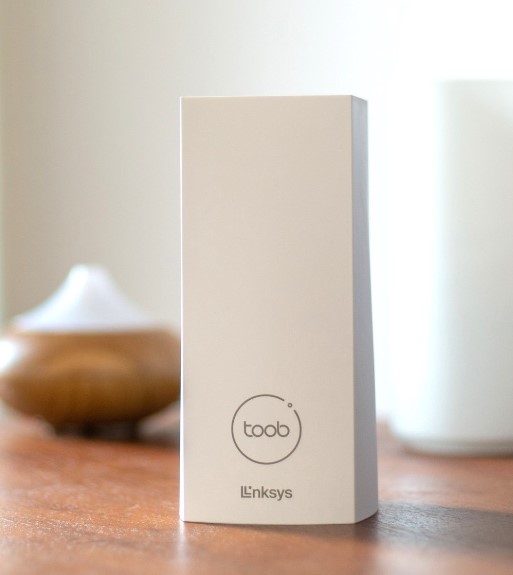
In 2024, toob started to ship a toob branded Linksys (model SPNMX55 – AX5400) router as standard equipment.

This new router offers WiFi-6 support and links with other similar devices to form a mesh WiFi network for larger homes. This router is available on eBay for ~£50.00


Performance

I left the service running for a day or so and started testing in earnest. I connected my existing mesh WiFi to the toob router and found I could get 100 Mbps or more throughout the house and into the garden. Upload and download speeds were similar with both speeds being slightly slower in the evening. In many rooms in my house, I can see speeds approaching 450Mbps, via mesh WiFi.

May 2023

Ethernet attached devices are delivering 900Mbps+ upload and download. These speeds have remained consistant throughout the first year of operation (May 2022 – May 2023). Ping speeds are consistently <6ms.

I found that older PCs were not able to deliver the full gigabit speeds but were limited to <100 Mbps.


Reliability

A network analysis tool has found that the reliability is high (99.99% and more) with only a couple of very brief interruptions in service.

There have been a few longer interruptions in service in the first year of operation. Two of these were pre-announced via email and one was an unplanned interruption.

  • On the latter occasion, in April 2024, I contacted toob by email and they advised there was indeed an issue overnight (02:00-06:00).
  • In August 2024 there was an interruption in service of 2.5 hours from 18:00.

Ping analysis has shown that there is no perceptible packet loss (failed pings) during normal operation.


Limitations of using CGNAT

Like some ISP’s and many mobile network companies, toob is using Carrier Grade Network Address Translation (CGNAT) in their network to provide your IP address. You can find out about CGNAT here or on Wikipedia. The fact that toob uses CGNAT should not be an issue for most users.

  • some advanced gamers will find CGNAT quite limiting.
  • If you want to establish a connection to your network devices from the wider internet
    (eg; running a web server or VPN server) then you will also have some challenges.

Toob offers a static IP address option, for an additional monthly fee. Other CGNAT workarounds are available including Cloudflare tunnels, OpenVPN cloud, ZeroTier and Tailscale.


3G shutdown in the UK

Mobile phone operators in the UK are preparing to close down their 3G networks.


There are 4 mobile network operators (MNO) in the UK

  • Vodafone
  • Three
  • O2
  • EE

If you buy a phone or SIM from another provider (an MNVO) then that provider uses one of the 4 networks listed above. A list of MNVOs is available here.

The image below shows the major MNVOs and their associated MNOs.


The UK MNOs are preparing to shut down their 3G networks.
This 3G shutdown is in progress in Europe, Australia and in the USA. It has been completed in a few countries in Europe. Most people won’t be affected as the overwhelming majority of phones released in the UK in the past 10 years are working on 5G and 4G, as well as 3G. However, users of 3G-only phones may be impacted; there may be millions of older 3G-only phones in the UK. There are over 80 million mobile phone subscriptions in the UK in 2021.

Very little data is carried by the 3G networks – some operators report (in 2021) that as little as 2% of their data is 3G originated data. 2G networks may remain in use for longer than 3G because it offers wide coverage and comparatively low power requirements which make them ideal for some IoT deployments.

Smart gas and electricity meters use the O2 2G network in much of England and Wales. In the north of England and Scotland, smart meters use a long-range radio network (400MHz) provided by Arqiva, which also provides telecom networks for the emergency services, including RNLI. Smart meters may require upgrading to 4G technology in the next few years.

The radio frequencies used by the 3G networks will be re-purposed for use in the 5G networks that the MNOs are busy installing in many areas of the UK. MNOs spent some £22.5bn for the rights to use these radio frequencies at the auction of the UK radio spectrum in 2000. Three launched the UK’s first 3G network in 2003.

Some areas of the UK do not have a good 4G (or 5G) signal and depend upon 3G for data. Based on coverage data, approximately 2.2% of the UK is only covered by a 3G signal. For the most part, this is in remote locations such as rural Scotland, parts of North Norfolk, Wales and Cornwall. The MNOs should be expanding their 4G networks to provide coverage to these areas before the 3G shutdown.

Does this affect me?
If you’re a customer of a UK MNO or MNVO with an older mobile phone that doesn’t have 4G or 5G, you will no longer be able to use it for data once the 3G network is switched off by your MNO.

To check if your phone works on 4G or not, visit the IMEI Info website. By following the website’s instructions, you’ll find and type in your phone’s 15-digit IMEI number. After typing in this unique identifying number, you will see a webpage listing your phone’s specifications. If it has a tick in the ‘LTE’ box (LTE or Long-Term-Evolution is another term for 4G), then your phone can use mobile data on 4G networks.


What does 3G mean?
2G is short for the second generation mobile phone network.
Terms like EDGE and GPRS refer to 2G technologies. Data rates of 48 Kbps are possible.
3G is the third generation of mobile phone technologies.
Terms like HSPA, HSPA+ and refer to 3G, Data rates of several Mbps are possible.
4G is therefore the fourth generation.
Terms like LTE refer to 4G. Data rates of 100Mbps are possible.
5G refers to the fifth generation. Data rates measured in Gbps are theoretically possible but, in practice, speeds up to 500 Mbps can be expected in early 5G networks.
6G is in the planning and design phase.


  • Vodafone – closed in February 2024.
  • EE – closed in February 2024.
  • Three – closed at the end of 2024.
  • O2 say their 3G network will close by the end of 2025.

The British government is aiming to shut down all 2G and 3G networks by 2033 at the latest. EE has said, as coverage of 4G and 5G is rolled out, it hopes to be able to shut down its 2G network as soon as 2025.


Will my older phone work?
If you use an old mobile phone that is not 4G capable then you may no longer be able to access the internet when your MNO shuts its 3G service, unless it uses the O2 network. You can search to find your phone’s capabilities here on GSM-Arena’s website.
If your phone did not receive the Emergency Alert (Apr 23, 2023) then it may not be 4G capable.


What should I do if I have an older mobile phone
If you have identified that your phone is not 4G capable then you have options

  • Switch provider to O2
    If you are happy with your 3G phone, then you need not worry – you can switch providers to O2 which is not shutting down its 3G service until the end of 2025. Go to the O2, Giffgaff, Tesco mobile website or the O2 local shop and get a suitable SIM. Go through the procedure to transfer your phone number to the new provider. This option may be cheaper than your existing supplier.
  • Acquire a 4G capable phone to replace your existing phone. Plenty of new or refurbished 4G phones are available on eBay for good prices – well under £100 for a new phone. It is suggested that you don’t go out and buy a new state-of-the-art 5G capable phone costing hundreds of pounds, as there are cheaper routes to resolve your dilemma.

The Guardian

Wikipedia explanation of 2G, 3G, 4G, 5G

Smart Meters and Issues

ISPreview

Which?

EE/BT factsheet

OFCOM


Toob progress

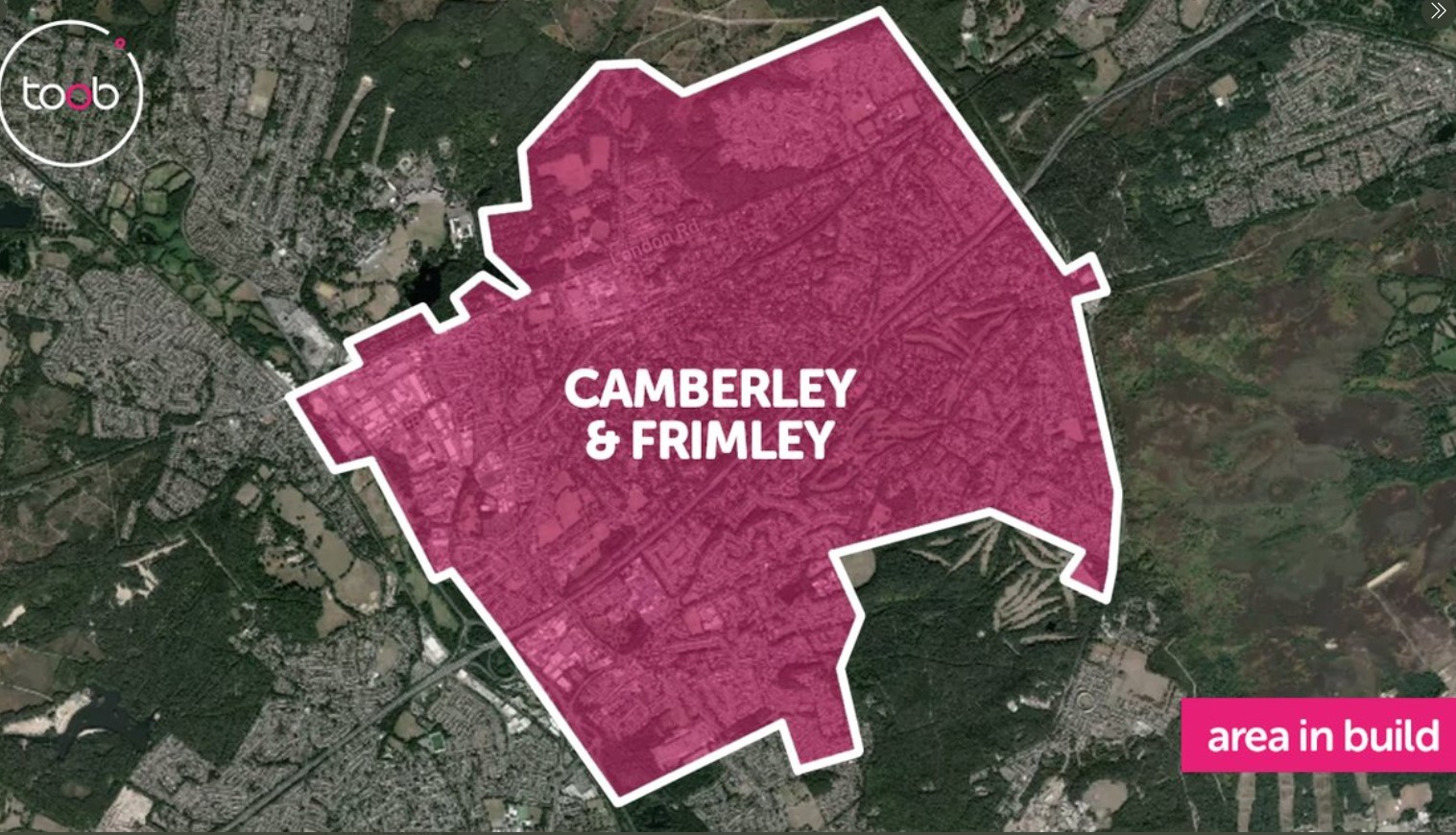
In late 2020 there was a big fanfare when toob announced it was to install gigabit internet connectivity in Camberley and Frimley.

Benefits of new technology internet services.

Who is toob?

Toob is a Portsmouth based ‘altnet’ company that is installing gigabit internet networks in Portsmouth, Eastleigh, Chandlers Ford and Southampton. Locally toob is expanding its network to Blackwater and beyond.

Toob’s infrastructure build

In Sep 2020, toob sought planning permission to erect a cabin at Camberley Cricket Club to house the necessary infrastructure for a fibre-optic gigabit network hub. The company already operate a gigabit internet service in Southampton, offering speeds of up to 900Mbps (both download and upload speed).

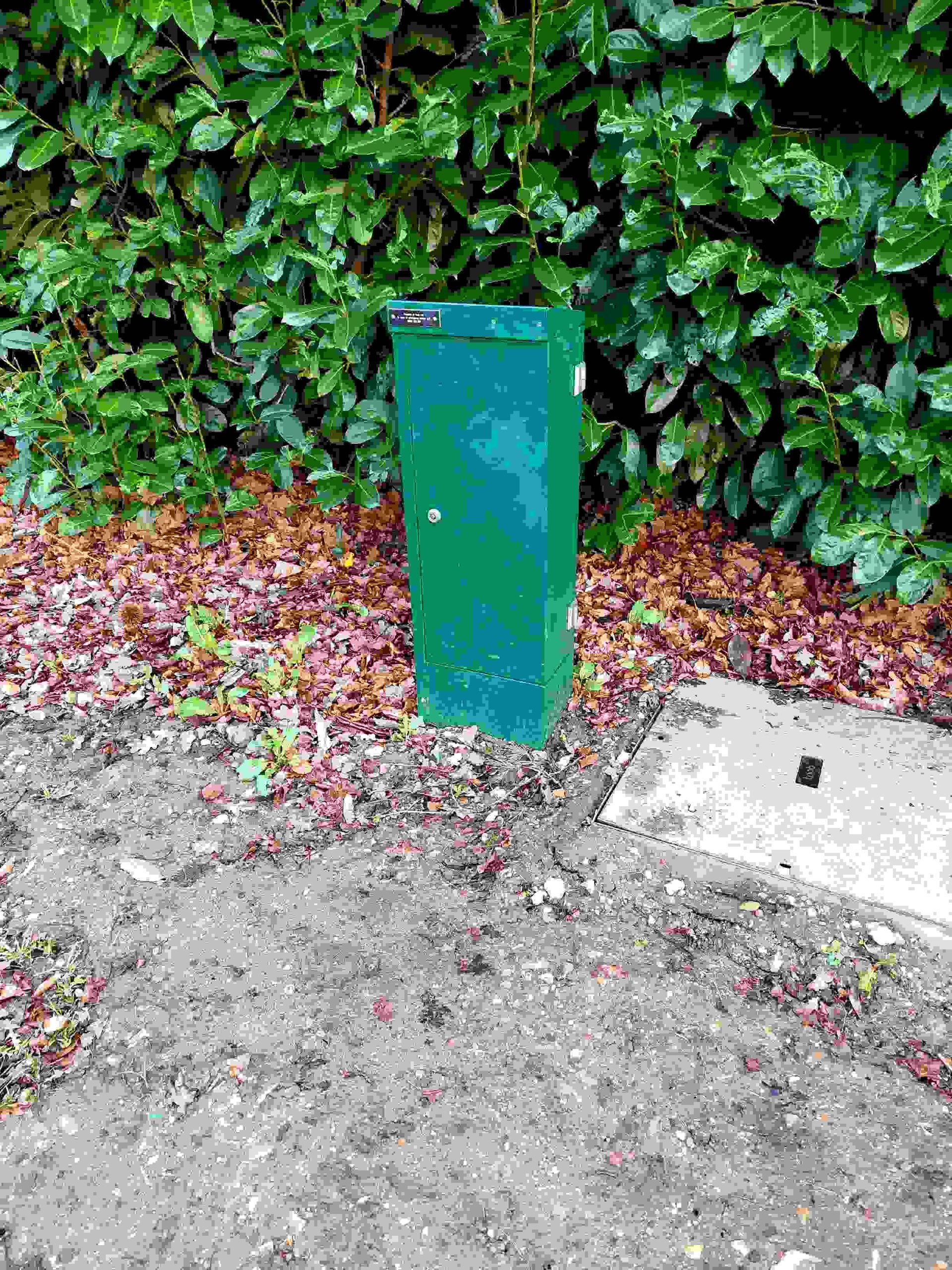
By Apr 2021 the cabin had been installed and design and implementation works were in progress. Ducts were being surveyed and cleared in several areas of Camberley. Toob planned to use BT/Openreach ducts, where it could, and to deliver to houses using Openreach’s poles where this was the means of delivery of telephone service. This work and new duct laying work continued slowly and neat green roadside cabinets started to appear. It seemed that there was only a small workforce deployed on this phase of the project.


By Feb 2022, some progress was being seen in Hillcrest Road. The route seemed to be along Crawley Ridge, Portsmouth Road, into Wellington Park. Work was in progress to connect the various telephone poles to the underground ducts. New sub-ducts were being installed, where necessary. Strange markings appeared on Openreach chambers. I suspect there may need to be a new duct laid in the lower parts of Hillcrest Road. There was a significant amount of new duct laid to the flats opposite Seymour Drive from Highbury Close. Work was also seen in neighbouring streets like Beaufront Road and Iberian Way.


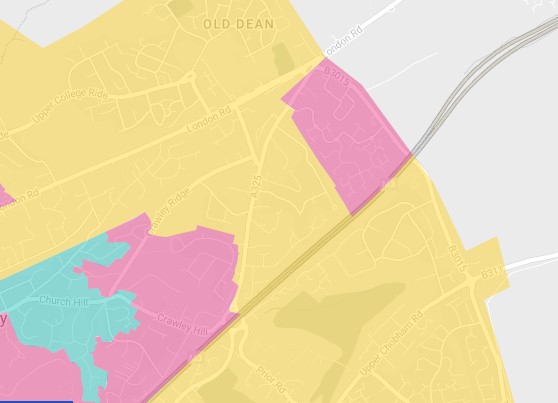
In Feb 2022, toob’s website announced that it was taking orders for some parts of Camberley, other parts were ‘in build’ while our area remained ‘in design’.

I wondered how long it might be until we were in the ‘taking orders’ category. A few months I expect. But I am sure it will be worth it.

March 14 2022 – I saw CBTs being installed on poles in Church Hill. CBTs have been spotted on poles in Hillcrest Road as well. Also work is starting north of the A30

Toob has connected users already – Surrey Live March 4

Users of the new toob internet service are generally very pleased with their offering.
Their installation experience was good, performance is as described and others report no interruptions in service. The WiFi is much superior to VM’s WiFi offering and one user reports he has been able to dispense with all WiFi repeaters in a larger house, and their toob WiFi reaches into their garden.

In early April 2022 – Toob started to dig in Hillcrest Road

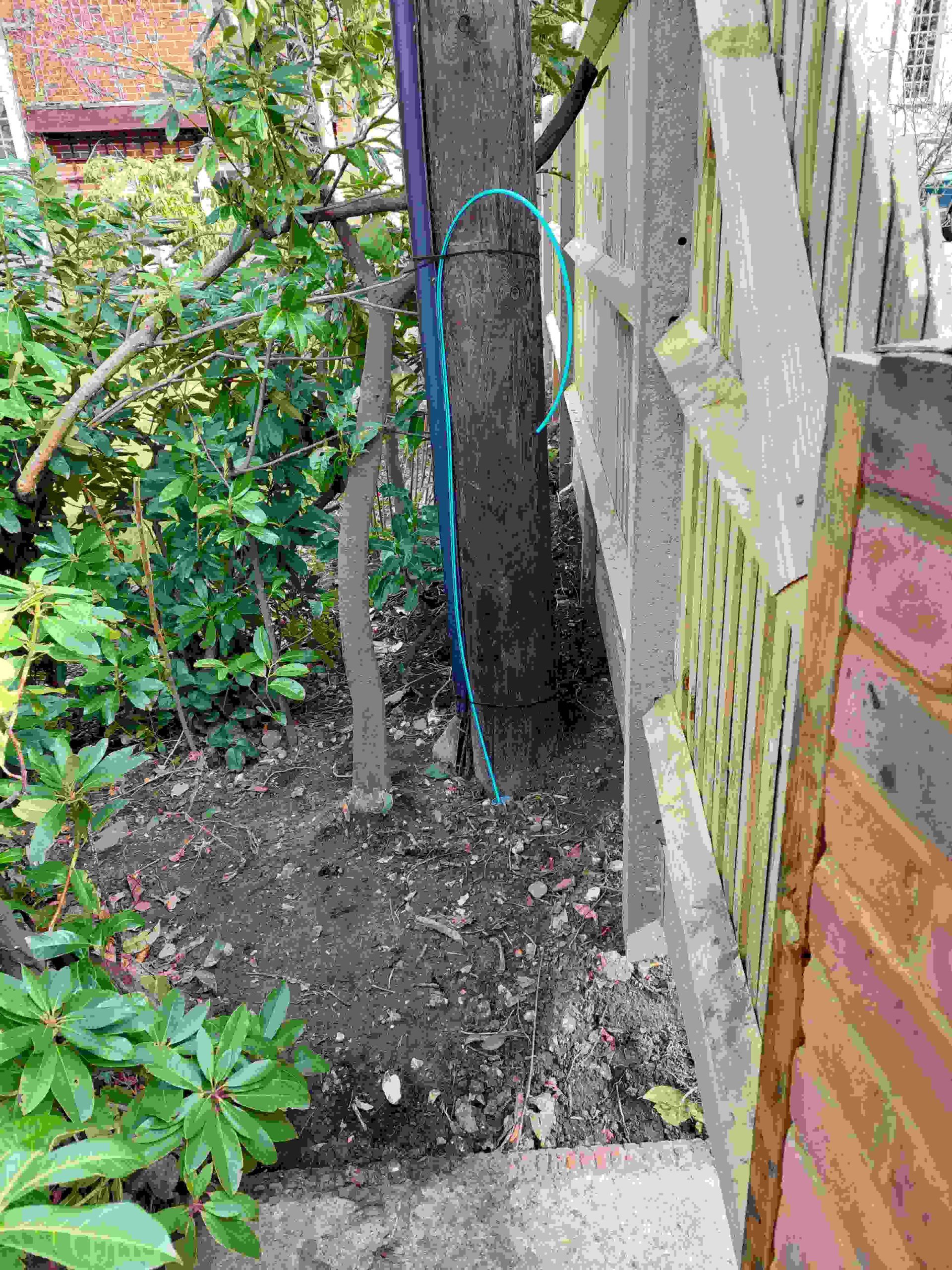
Then I saw some fibre appear – so it looks like they have installed fibre to the pole. Have they installed it all the way up the road yet?

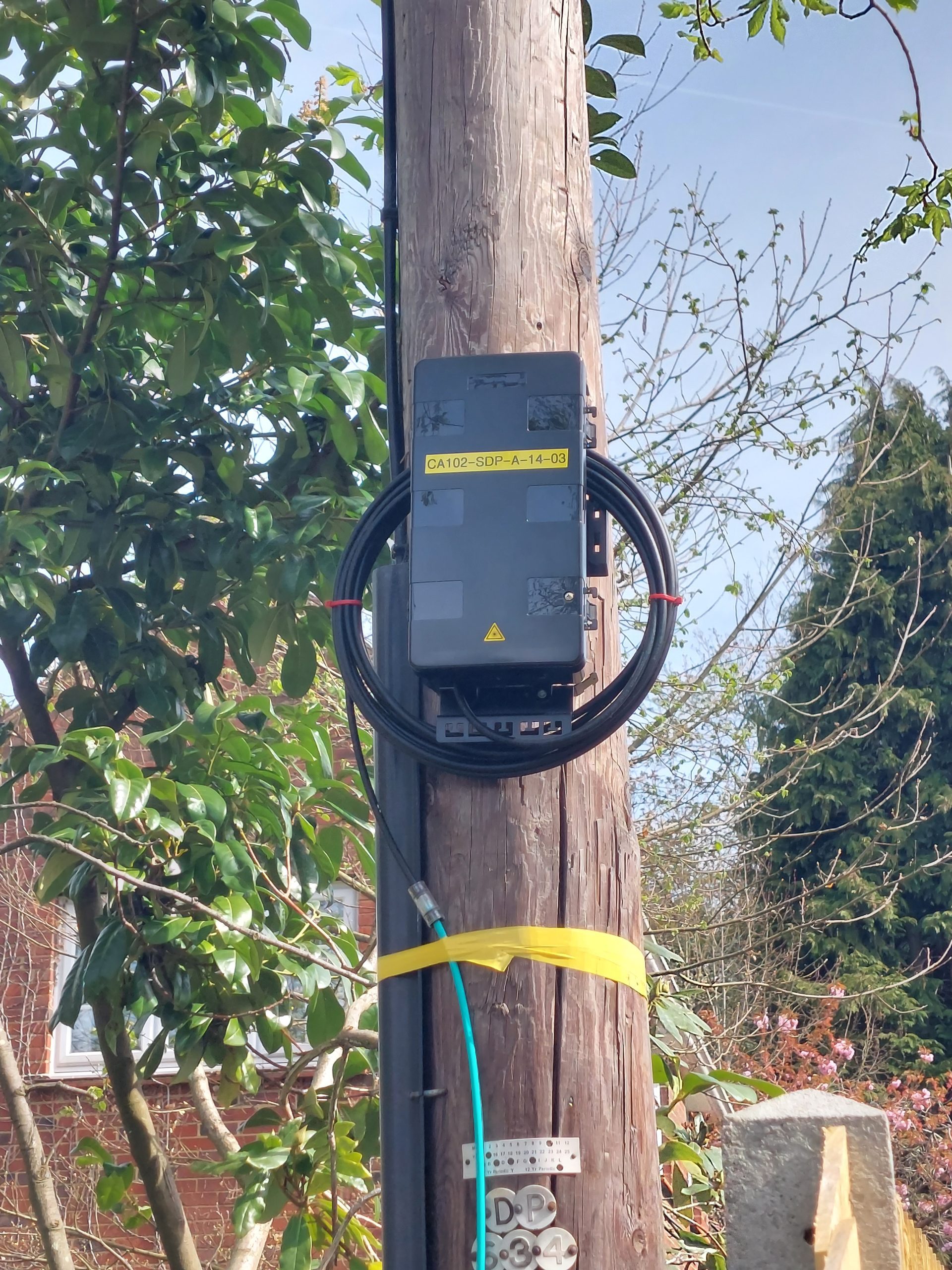
Next, they will install the pole connector block at the top of the poles and then the fibre to the houses can be installed.

April 25, 2022 – I hear that toob is asking Wellington Park residents if they wish to have toob internet installed. Installation happens after a few days.

toob installation – May 2022

April 29, 2022 – received notification that I could now order toob. I completed the order and scheduled the installation. Hopefully, it will happen in a couple of weeks. Now I need to plan the internal stuff – where to locate the NTE, the router and associated switches, and sort out the power sockets.

May 5, 2022 – toob phoned me to delay the installation as they were not ready. The connector blocks have been installed at the top of the poles in the last few days. I don’t yet have a new date for installation. Wellington Park residents are having toob installed this week and have reported no issues. These houses have underground delivery. Facebook link (Private Group)

May 9, 2022 – toob arranged a new date for installation

May 16, 2022 – Installation Day – toob arrive on-site and start the installation. A cable was run from the top of the pole in the street to my house and then 10m across the front of the house (out of sight) to an entry box on the outside wall. Then through the wall to the ONT.
Within an hour after arriving they were demonstrating the toob service was running 900Mbps+ (to the ONT). It’s a bit slower out of the router and (of course) WiFi does not deliver anywhere near 900Mbps; but 450Mbps was seen in the same room as the router.


See my post on Toob Installation and Performance